 RSS FEED
 TWITTER


Showing posts with label Classic MG Car. Show all posts
Showing posts with label Classic MG Car. Show all posts
Models Mg Rover 200 Series
Monday, February 14, 2011
12:29 AM
,
11 Comments

ป้ายกำกับ: Article , Autos , Cars , Cars Article , Cars Models , Classic Cars , Classic MG Car , Classic MG Cars , MG cars , Mg Classic Cars , Mg Rover , Mg Rover 200 , Mg Rover 200 Series , MG Rover Group , Rover , Rover 200

Picture Of
Related : Models Mg Rover 200 Series From Wikipedia, the free encyclopedia, Mg Classic Cars
Read more »
ป้ายกำกับ: Article , Autos , Cars , Cars Article , Cars Models , Classic Cars , Classic MG Car , Classic MG Cars , MG cars , Mg Classic Cars , Mg Rover , Mg Rover 200 , Mg Rover 200 Series , MG Rover Group , Rover , Rover 200
Mg Classic Cars
Models Mg Rover 200 Series

Picture Of
Mg Classic Cars
Mg Classic Cars
Models Mg Rover 200 Series
Mg Classic Cars is a former MG British sports car manufacturer. The Rover Group plc was the name given in 1986 to the British state-owned vehicle manufacturer previously known as British Leyland or BL. Owned by British Aerospace from 1988 to 1994, when it was sold to BMW, the Group was broken up in 2000 with the Rover and MG marques being acquired by the MG Rover Group.
The Rover Group's first significant new car launch was the Rover 200, which was introduced in October 1989. Unlike its predecessor, it was a three- or five-door hatchback instead of a four-door saloon. It used a new range of 16-valve K Series petrol engines as well as a Peugeot 1.9 diesel and 1.8 turbodiesel both fitted to the Phase 1 Peugeot 405. Sales were stronger than its successors, and its launch coincided with a winding-down in production of the similarly-sized Maestro, which finally ceased production at the end of 1994 having spent the final years of its life as a budget alternative to the more upmarket Rover 200. Coupe and cabriolet versions of the 200 were later sold, and these were sold alongside the all-new 1995 model and continued until that model was upgraded to become the Rover 25 in 1999. The 1989 Rover 200 was a strong seller throughout its life and its successor continued this trend, though its final year of production (1999) saw a significant dip in sales. These strong sales were not as high as the ever-popular Ford Escort and Vauxhall Astra. The Rover 200 had actually been around since 1988 as the Longbridge-built Honda Concerto, which offered a higher level of equipment but only achieved a fraction of its sales.
The Rover Group's first significant new car launch was the Rover 200, which was introduced in October 1989. Unlike its predecessor, it was a three- or five-door hatchback instead of a four-door saloon. It used a new range of 16-valve K Series petrol engines as well as a Peugeot 1.9 diesel and 1.8 turbodiesel both fitted to the Phase 1 Peugeot 405. Sales were stronger than its successors, and its launch coincided with a winding-down in production of the similarly-sized Maestro, which finally ceased production at the end of 1994 having spent the final years of its life as a budget alternative to the more upmarket Rover 200. Coupe and cabriolet versions of the 200 were later sold, and these were sold alongside the all-new 1995 model and continued until that model was upgraded to become the Rover 25 in 1999. The 1989 Rover 200 was a strong seller throughout its life and its successor continued this trend, though its final year of production (1999) saw a significant dip in sales. These strong sales were not as high as the ever-popular Ford Escort and Vauxhall Astra. The Rover 200 had actually been around since 1988 as the Longbridge-built Honda Concerto, which offered a higher level of equipment but only achieved a fraction of its sales.
Related : Models Mg Rover 200 Series From Wikipedia, the free encyclopedia, Mg Classic Cars


Used Classic Mg Cars With Mg Rover 800 In 1992 - the R17 major facelift Parts 1
Wednesday, November 10, 2010
10:13 AM
,
0 Comments
ป้ายกำกับ: 1992 MG Cars , Classic MG Car , Classic MG Cars , MG cars , Mg Classic Car , Mg Classic Cars , Mg Rover , Mg Rover 800 , R16 major , R17 major , sport models , Vitesse Sport

Picture Of
Read more »
ป้ายกำกับ: 1992 MG Cars , Classic MG Car , Classic MG Cars , MG cars , Mg Classic Car , Mg Classic Cars , Mg Rover , Mg Rover 800 , R16 major , R17 major , sport models , Vitesse Sport
Used Classic Mg Cars With Mg Rover 800 In 1992 - the R17 major facelift Parts 1

Picture Of
Classic MG Cars
Classic MG Cars
MG Classic Cars Parts 1
MG cars In early 1992, the Mg Rover 800 was re-skinned and re-engineered under the R17 codename This saw the re-introduction of the traditional Mg Rover grille and more curvaceous bodywork. The scope of the design change was restricted by the need to retain the core XX structure, including the door structure and skin design.
The redesign was a partial answer to major press and market criticism of the "folded paper" school of design and the quest for better aerodynamics that had led to many cars appearing very similar, especially from the front. The redesign found much favour and as a result the car's sales enjoyed a renaissance, the MG Rover 800 series becoming Britain's best selling executive car in the early to mid 1990s.
Following concerted efforts to learn from the problems that had hit the early model years, especially under the more extreme United States market and climatic conditions, quality in general had improved dramatically by this stage, but the decision to leave the US market had already been taken.
The 2.0 L T16 replaces the M16 found in pre 1992 cars and comes in NASP and Turbo forms, the 2.0 L turbo was fitted to the "Vitesse" and the later "Vitesse Sport" (1994–96).
Notable differences between the sport and non sport models were:
Vitesse Sport came with 17" six-spoke alloys (non sport was 16" seven-spoke), a power increase from 177 bhp (132 kW; 179 PS) to 197 bhp (147 kW; 200 PS) and revised stiffer suspension to aid handling.
The MG Rover 800s as fitted with the Honda 2.7 are very reliable if well serviced, however they suffered from noisy tappets when cold.
The redesign was a partial answer to major press and market criticism of the "folded paper" school of design and the quest for better aerodynamics that had led to many cars appearing very similar, especially from the front. The redesign found much favour and as a result the car's sales enjoyed a renaissance, the MG Rover 800 series becoming Britain's best selling executive car in the early to mid 1990s.
Following concerted efforts to learn from the problems that had hit the early model years, especially under the more extreme United States market and climatic conditions, quality in general had improved dramatically by this stage, but the decision to leave the US market had already been taken.
The 2.0 L T16 replaces the M16 found in pre 1992 cars and comes in NASP and Turbo forms, the 2.0 L turbo was fitted to the "Vitesse" and the later "Vitesse Sport" (1994–96).
Notable differences between the sport and non sport models were:
Vitesse Sport came with 17" six-spoke alloys (non sport was 16" seven-spoke), a power increase from 177 bhp (132 kW; 179 PS) to 197 bhp (147 kW; 200 PS) and revised stiffer suspension to aid handling.
The MG Rover 800s as fitted with the Honda 2.7 are very reliable if well serviced, however they suffered from noisy tappets when cold.
Mg Classic Sport cars The Rover Group
Thursday, October 21, 2010
3:20 AM
,
0 Comments
ป้ายกำกับ: Classic MG Car , Classic MG Cars , Mg Classic Car , Mg Classic Cars , Mg Rover 800
The Rover Group
Read more »
ป้ายกำกับ: Classic MG Car , Classic MG Cars , Mg Classic Car , Mg Classic Cars , Mg Rover 800
The Rover Group
MG Rover 800 Classic Cars in the United States, the car was known as the Sterling, and was only available with the 2.5 litre Honda V6 petrol engine. Initial sales in America were strong, and the design was well received. However, early vehicles were soon found to have been under-developed and quality and reliability problems soon escalated to a crisis. The sales then fell as the reputation of the model deteriorated, especially as soon as J.D. Power surveys criticised initial quality and reliability publicly. This was especially damaging as at the same time, the same core vehicle, the Acura Legend was doing extremely well in America.
Many mechanical and chassis parts for the Sterling 825/827 are still readily available due to the fact that it was largely identical to the much more popular Acura Legend in these areas, save for engine cooling and braking systems. However, electrical, body, and interior parts are quite difficult to locate in the US now.
In Europe especially, the Rover 800 was hampered by Honda's insistence on using its own double-wishbone front suspension. This allowed a low bonnet-line, but restricted the total suspension-travel, which in turn could not give the Rover 800 the executive car ride qualities and traction on poorly surfaced roads which were necessary for it to compete. The first 2.5 L engine also lacked low-end torque, which particularly affected its "drivability". The 4-cylinder cars suffered from reliability problems, thanks to the fragile Lucas fuel injection systems which Rover used.
It should be noted that the 2.5 L Honda V6 is a completely different engine from the Rover KV6 Engine introduced in 1996, although the two share the same nominal 2.5 L capacity and a V6 architecture.
Early build quality of the Rover 800 was reportedly fairly poor, (J.D. Power) with trim, electrics and paintwork problems. The Rover 800 did have a roomy and luxurious interior but this did not save the car from gaining a poor reputation from which it never really recovered. Corrosion problems in early models also marred its reputation.
By 1989, the 2.5 L engine was enlarged to 2.7 L, the expensive Maestro-derived instrumentation had been changed to gauges sourced from a different component-builder (losing the oil pressure gauge and voltmeter in the process) and build quality had improved. A budget version of the 800, using an eight-valve (as opposed to the usual 16-valve) version of the O-Series engine was introduced, but was short-lived.
The original version of the Rover 800 was one of the most popular cars in Britain's full-sized executive car market, which at this stage was effectively split into two strong sectors — mainstream brands such as Ford and Vauxhall, and prestige brands such as BMW and Audi. It directly competed with the likes of the Ford Granada/Scorpio and Vauxhall Carlton.
The Rover Group Classic MG Rover 800 Cars Parts 2
Friday, September 10, 2010
5:09 AM
,
1 Comment
ป้ายกำกับ: Classic MG Car , Classic MG Cars , Mg Classic Car , Mg Classic Cars , Mg Rover 800
Mg Rover 800
Read more »
ป้ายกำกับ: Classic MG Car , Classic MG Cars , Mg Classic Car , Mg Classic Cars , Mg Rover 800
The Rover Group MG Rover 800 Classic Cars
 Picture Of Mg Classic cars Rover 800
The Rover 800 was designed as a replacement for the Rover SD1. Development of the car began in 1981 as parts of a venture with Honda under the XX codename. MG Classic Cars is a former MG British sports car manufacturer. The Rover Group plc was the name given in 1986 to the British state-owned vehicle manufacturer previously known as British Leyland or BL.
Mg Rover 800
Range

Picture Of Mg Classic cars Rover 800
The basic versions of the 800 used three naturally aspirated 2.0 L 16-valve developments of British Leyland's stalwart O-Series engine, dubbed M-Series. The 820, with single carburettor, the 820se, with single point injection, and the 820i with multi-point injection, i.e. 4 injectors. The top versions (827) used a Honda designed V6 unit in 2.7 L capacity. Initially, only a saloon body was offered; a liftback version — referred to as a fastback — became available in 1988.
Later, a diesel version of the car was launched in 1990 using a 2498 cc engine from Italian company VM Motori, which was related to the slightly smaller engine used in the 2400 SD Turbo model of the Rover SD1, and Range Rover Turbo D.
The Sterling badge was used in Europe and most global markets to denote the top saloon luxury version and the Vitesse badge used to denote the top fastback sporting version. The Vitesse became available at the same time as the 2675 cc Honda V6. Both of these top of the range models were initially only available in the UK with the V6. In some European markets, in particular Italy, the 2.0 litre petrol was badged as Sterling and later available (in turbo form) as Vitesse to avoid the punishing duties that made engines over 2.0 litres unviable for volume sales.
Towards the end of Mark 1 production the Vitesse had nearly as many "luxury" features as the Sterling (for example, electric seats). There was also a brief run of just over 500 820 Turbo 16v cars using a turbocharged version of the M-Series developed with help from Tickford, leading to this model often being referred to as the "Tickford Turbo". Utilising such enhancements as sodium-filled exhaust valves and Mahle forged pistons the car produced 180 bhp (134 kW), although there is much speculation about this figure being severely held back by the electronics as not to step on the toes of the 177 bhp (132 kW) V6 engined Vitesse model as well as to preserve the reliability of the gearbox. In reality the engine was capable of 250+hp while still preserving the realiability and drivability.
The Rover Group Classic MG Cars Parts 1
Thursday, September 9, 2010
5:28 AM
,
1 Comment
ป้ายกำกับ: Classic MG Car , Classic MG Cars , Mg Classic Car , Mg Classic Cars
Read more »
ป้ายกำกับ: Classic MG Car , Classic MG Cars , Mg Classic Car , Mg Classic Cars
The Rover Group
MG Classic Cars is a former MG British sports car manufacturer. The Rover Group plc was the name given in 1986 to the British state-owned vehicle manufacturer previously known as British Leyland or BL. Owned by British Aerospace from 1988 to 1994, when it was sold to BMW, the Group was broken up in 2000 with the Rover and MG marques being acquired by the MG Rover Group.

Picture Of Mg Classic cars Rover 800
Models
Rover 800 series
Although the Rover 800 went on sale shortly after Austin Rover became the Rover Group, it had actually been developed entirely by Austin Rover and was a result of the final new model development by BL - it was developed in conjunction with Honda. It sold well among buyers in the executive market, with a facelift in 1991 keeping its appeal reasonably fresh. However, it stagnated after a replacement targeted for the 1992 model year was cancelled. Many of its duties as a flagship were performed by the 600. By its demise in late 1998, it was looking considerably dated.

Picture Of Mg Classic cars Rover 800
The Rover 800 series is an executive car introduced by the Austin Rover Group in 1986 and also marketed as the Sterling in the United States. Co-developed with Honda, it was a close relative to the Honda Legend and the successor to the Rover SD1.
Development
Partnership with Honda
The Rover 800 was designed as a replacement for the Rover SD1. Development of the car began in 1981 as part of a venture with Honda under the XX codename; the corresponding Honda version was known as the Honda Legend, and was codenamed as HX. The development work was carried out at Rover's Canley plant and Honda's Tochigi development centre. The European market Legend was produced by Austin-Rover alongside the 800 in the former Morris plant in Cowley, Oxfordshire. US-market (Acura) Legends were built in Japan.
Nuffield Organisation
Monday, June 28, 2010
1:07 PM
,
0 Comments
ป้ายกำกับ: Classic MG Car , Classic MG Cars , Mg Classic Car , Mg Classic Cars , Nuffield Organisation
 Picture Of Mg Classic Cars
Read more »
ป้ายกำกับ: Classic MG Car , Classic MG Cars , Mg Classic Car , Mg Classic Cars , Nuffield Organisation
Nuffield Organisation
 Picture Of Mg Classic Cars
The Nuffield Organisation was a vehicle manufacturing company in the United Kingdom. Named after its founder, William Morris, 1st Viscount Nuffield, it was formed in 1938 as the merger of Nuffield's Morris Motor Company (already having acquired Wolseley Motors in 1927), another of Nuffield's companies the MG Car Company and Riley.
 Picture Of Mg Classic Cars
Morris Motors Ltd included Morris Commercial Cars which made light commercial vehicles such as vans.
 Picture Of Mg Classic Cars
Originally owned personally by William Morris, the company was sold to Morris Motors (itself part of the Nuffield Organisation) in 1935; a change that was to have serious consequences for the company, particularly its motor-sport activities.
 Picture Of Mg Classic Cars
Morris Motors Ltd included Morris Commercial Cars which made light commercial vehicles such as vans.
 Picture Of Mg Classic Cars
Originally owned personally by William Morris, the company was sold to Morris Motors (itself part of the Nuffield Organisation) in 1935; a change that was to have serious consequences for the company, particularly its motor-sport activities.
The British Motor Corporation (BMC) The End Parts
Wednesday, June 23, 2010
12:55 PM
,
0 Comments
ป้ายกำกับ: British Motor Corporation (BMC) , Classic MG Car , Classic MG Cars , Mg Classic Car , Mg Classic Cars
The British Motor Corporation (BMC) The End Parts
 Picture Of Mg Classic Cars
Read more »
ป้ายกำกับ: British Motor Corporation (BMC) , Classic MG Car , Classic MG Cars , Mg Classic Car , Mg Classic Cars
The British Motor Corporation (BMC) The End Parts
 Picture Of Mg Classic Cars
The end of BMC
In 1966 BMC and Pressed Steel merged with Jaguar Cars to form British Motor Holdings (BMH). In 1968 there was a further wave of mergers in the British car industry, (under pressure from the Labour British Government and Minister of Technology Tony Benn) and BMH merged with the Leyland Motor Corporation (LMC) to form the British Leyland Motor Corporation (BLMC), the original BMC mass-production, and MG sports car products being brought together into the Austin Morris division of the new organisation. In 1975 BLMC was nationalised and became British Leyland Limited.The British Motor Corporation (BMC) Parts 6
Friday, June 18, 2010
12:41 PM
,
0 Comments
ป้ายกำกับ: British Motor Corporation (BMC) , Classic MG Car , Classic MG Cars , Mg Classic Car , Mg Classic Cars
The British Motor Corporation (BMC) Parts 6
 Picture Of Mg Classic Cars
Read more »
ป้ายกำกับ: British Motor Corporation (BMC) , Classic MG Car , Classic MG Cars , Mg Classic Car , Mg Classic Cars
The British Motor Corporation (BMC) Parts 6
 Picture Of Mg Classic Cars
BMC Designs
1. Austin
* Austin A40 Somerset 1952-1954
* Austin A40 Cambridge 1954-1958
* Austin A90 Westminster 1954-1968
* Austin Metropolitan 1954-1961
* Austin A35 1956-1959
* Austin Lancer (Australia) 1958-1962
* Austin Princess IV 1956-1959
* Austin A40 Farina 1958-1967
* Austin A55 Cambridge 1959-1969
* Austin Mini 1959-1989
* Austin Freeway (Australia) 1962-1965
* Austin 1100/1300 1963-1974
* Austin 1800 1964-1975
* Austin 3-Litre 1967-1971
* Austin Maxi 1969-1981 (Designed in the BMC era)
2. Austin-Healey
* Austin-Healey 100 1953-1959
* Austin-Healey 3000 1959-1968
* Austin-Healey Sprite 1958-1971
3. MG
* MG A 1955-1962
* MG Magnette ZA/ZB 1953-1959
* MG Magnette Mk III/Mk IV 1959-1968
* MG Midget 1961-1974
* MGB 1962-1980
* MG 1100/1300 1962-1973
* MGC 1967-1969
4. Morris
* Morris Oxford 1954-1971
* Morris Cowley 1954-1959
* Morris Isis 1955-1958
* Morris Marshal (Australia) 1957-1960
* Morris Major (Australia) 1958-1964
* Morris Mini-Minor 1959-2000
* Morris 1100/1300 1963-1974
* Morris 1800 1964-1975
5. Riley
* Riley Pathfinder 1953-1957
* Riley 2.6 1958-1959
* Riley 1.5 1957-1965
* Riley 4/68 1959-1961
* Riley 4/72 1961-1969
* Riley Elf 1961-1969
* Riley Kestrel 1965-1969
6. Vanden Plas
* Vanden Plas 3 litre 1959-1964
* Vanden Plas 1100/1300 1963-1974
* Vanden Plas Princess 4 litre R 1964-1968
7. Wolseley
* Wolseley 4/44 1952-1956
* Wolseley 6/90 1954-1959
* Wolseley 15/50 1956-1958
* Wolseley 1500 1957-1965
* Wolseley 15/60 1958-1961
* Wolseley 16/60 1961-1971
* Wolseley 6/99 1959-1961
* Wolseley 6/110 1961-1968
* Wolseley Hornet 1961-1969
* Wolseley 24/80 (Australia) 1962-1967
* Wolsleley 1100/1300 1965-1973
* Wolseley 18/85 1967-1972
* Austin A40 Somerset 1952-1954
* Austin A40 Cambridge 1954-1958
* Austin A90 Westminster 1954-1968
* Austin Metropolitan 1954-1961
* Austin A35 1956-1959
* Austin Lancer (Australia) 1958-1962
* Austin Princess IV 1956-1959
* Austin A40 Farina 1958-1967
* Austin A55 Cambridge 1959-1969
* Austin Mini 1959-1989
* Austin Freeway (Australia) 1962-1965
* Austin 1100/1300 1963-1974
* Austin 1800 1964-1975
* Austin 3-Litre 1967-1971
* Austin Maxi 1969-1981 (Designed in the BMC era)
2. Austin-Healey
* Austin-Healey 100 1953-1959
* Austin-Healey 3000 1959-1968
* Austin-Healey Sprite 1958-1971
3. MG
* MG A 1955-1962
* MG Magnette ZA/ZB 1953-1959
* MG Magnette Mk III/Mk IV 1959-1968
* MG Midget 1961-1974
* MGB 1962-1980
* MG 1100/1300 1962-1973
* MGC 1967-1969
4. Morris
* Morris Oxford 1954-1971
* Morris Cowley 1954-1959
* Morris Isis 1955-1958
* Morris Marshal (Australia) 1957-1960
* Morris Major (Australia) 1958-1964
* Morris Mini-Minor 1959-2000
* Morris 1100/1300 1963-1974
* Morris 1800 1964-1975
5. Riley
* Riley Pathfinder 1953-1957
* Riley 2.6 1958-1959
* Riley 1.5 1957-1965
* Riley 4/68 1959-1961
* Riley 4/72 1961-1969
* Riley Elf 1961-1969
* Riley Kestrel 1965-1969
6. Vanden Plas
* Vanden Plas 3 litre 1959-1964
* Vanden Plas 1100/1300 1963-1974
* Vanden Plas Princess 4 litre R 1964-1968
7. Wolseley
* Wolseley 4/44 1952-1956
* Wolseley 6/90 1954-1959
* Wolseley 15/50 1956-1958
* Wolseley 1500 1957-1965
* Wolseley 15/60 1958-1961
* Wolseley 16/60 1961-1971
* Wolseley 6/99 1959-1961
* Wolseley 6/110 1961-1968
* Wolseley Hornet 1961-1969
* Wolseley 24/80 (Australia) 1962-1967
* Wolsleley 1100/1300 1965-1973
* Wolseley 18/85 1967-1972
The British Motor Corporation (BMC) Parts 5
Sunday, June 13, 2010
11:58 AM
,
0 Comments
ป้ายกำกับ: British Motor Corporation (BMC) , Classic MG Car , Classic MG Cars , Mg Classic Car , Mg Classic Cars
The British Motor Corporation (BMC) Parts 5
 Picture Of Mg Classic Cars
Read more »
ป้ายกำกับ: British Motor Corporation (BMC) , Classic MG Car , Classic MG Cars , Mg Classic Car , Mg Classic Cars
The British Motor Corporation (BMC) Parts 5
 Picture Of Mg Classic Cars
Inherited Models
1. Austin
* Austin A125 Sheerline 1947-1954
* Austin A135 Princess 1947-1956
* Austin A40 Sports 1950-1953
* Austin A70 Hereford 1950-1954
* Austin A30 1951-1956
* Austin A40 Devon 1947-1952
2. MG
* MG TD 1949-1953
* MG Y-type 1947-1953
3. Morris
* Morris Minor 1948-1971
* Morris Oxford (Series MO) 1948-1954
* Morris Six MS 1948-1953
4. Riley
* Riley RM series 1945-1955
5. Wolseley
* Wolseley 4/50 1948-1953
* Wolseley 6/80 1948-1954
* Wolseley Oxford Taxi 1947-1955
* Austin A125 Sheerline 1947-1954
* Austin A135 Princess 1947-1956
* Austin A40 Sports 1950-1953
* Austin A70 Hereford 1950-1954
* Austin A30 1951-1956
* Austin A40 Devon 1947-1952
2. MG
* MG TD 1949-1953
* MG Y-type 1947-1953
3. Morris
* Morris Minor 1948-1971
* Morris Oxford (Series MO) 1948-1954
* Morris Six MS 1948-1953
4. Riley
* Riley RM series 1945-1955
5. Wolseley
* Wolseley 4/50 1948-1953
* Wolseley 6/80 1948-1954
* Wolseley Oxford Taxi 1947-1955
The British Motor Corporation (BMC) Parts 4
Tuesday, June 8, 2010
11:37 AM
,
0 Comments
ป้ายกำกับ: British Motor Corporation (BMC) , Classic MG Car , Classic MG Cars , Mg Classic Car , Mg Classic Cars
The British Motor Corporation (BMC) Parts 4
 Picture Of Mg Classic Cars
Read more »
ป้ายกำกับ: British Motor Corporation (BMC) , Classic MG Car , Classic MG Cars , Mg Classic Car , Mg Classic Cars
The British Motor Corporation (BMC) Parts 4
 Picture Of Mg Classic Cars
The mid-sized Farinas were launched in 1958 with the Wolseley 15/60. Other members of the group included the Riley 4/68, Austin A55 Cambridge Mk II, MG Magnette Mk III, and Morris Oxford V. Later, the design was licensed in Argentina and produced as the Di Tella 1500/Traveller/Argenta. The mid-size cars used the B-Series straight-4 engine.
 Picture Of Mg Classic Cars
Most of these cars lasted until 1961, though the Di Tellas remained until 1965. They were replaced with a new Farina body style and most were renamed. These were the Austin A60 Cambridge, MG Magnette Mk. IV, Morris Oxford VI, Riley 4/72, and Wolseley 16/60. These mostly remained in production until 1968, with no rear wheel drive replacement produced.
 Picture Of Mg Classic Cars
Farina also designed a large car. Launched in 1959 as the Austin A99 Westminster, Vanden Plas Princess 3-Litre, and Wolseley 6/99, it used the large C-Series straight-6 engine. The large Farinas were updated in 1961 as the Austin A110 Westminster, Vanden Plas Princess 3-Litre Mk. II, and Wolseley 6/110. These remained in production until 1968.
 Picture Of Mg Classic Cars
Most of these cars lasted until 1961, though the Di Tellas remained until 1965. They were replaced with a new Farina body style and most were renamed. These were the Austin A60 Cambridge, MG Magnette Mk. IV, Morris Oxford VI, Riley 4/72, and Wolseley 16/60. These mostly remained in production until 1968, with no rear wheel drive replacement produced.
 Picture Of Mg Classic Cars
Farina also designed a large car. Launched in 1959 as the Austin A99 Westminster, Vanden Plas Princess 3-Litre, and Wolseley 6/99, it used the large C-Series straight-6 engine. The large Farinas were updated in 1961 as the Austin A110 Westminster, Vanden Plas Princess 3-Litre Mk. II, and Wolseley 6/110. These remained in production until 1968.
The British Motor Corporation (BMC) Parts 3
Thursday, June 3, 2010
11:12 AM
,
0 Comments
ป้ายกำกับ: British Motor Corporation (BMC) , Classic MG Car , Classic MG Cars , Mg Classic Car , Mg Classic Cars
 Picture Of Mg Classic Cars
Read more »
ป้ายกำกับ: British Motor Corporation (BMC) , Classic MG Car , Classic MG Cars , Mg Classic Car , Mg Classic Cars
The British Motor Corporation (BMC) Parts 3
 Picture Of Mg Classic Cars
In 1958, BMC hired Battista Farina to redesign its entire car line. This resulted in the creation of three "Farina" saloons, each of which was badge-engineered to fit the various BMC car lines.
 Picture Of Mg Classic Cars
The compact Farina model bowed in 1958 with the Austin A40 Farina. This is considered by many to be the first mass produced hatchback car: a small estate version was produced with a horizontally split tailgate, its size and configuration would today be considered that of a small hatchback. A Mark II A40 Farina appeared in 1961 and was produced through 1967. These small cars used the A-Series engine.
 Picture Of Mg Classic Cars
The compact Farina model bowed in 1958 with the Austin A40 Farina. This is considered by many to be the first mass produced hatchback car: a small estate version was produced with a horizontally split tailgate, its size and configuration would today be considered that of a small hatchback. A Mark II A40 Farina appeared in 1961 and was produced through 1967. These small cars used the A-Series engine.
The British Motor Corporation (BMC) Parts 2
Saturday, May 29, 2010
10:55 AM
,
0 Comments
ป้ายกำกับ: British Motor Corporation (BMC) , Classic MG Car , Classic MG Cars , Mg Classic Car , Mg Classic Cars
 Picture Of Mg Classic Cars
Read more »
ป้ายกำกับ: British Motor Corporation (BMC) , Classic MG Car , Classic MG Cars , Mg Classic Car , Mg Classic Cars
The British Motor Corporation (BMC) Parts 2
 Picture Of Mg Classic Cars
BMC's headquarters were at the Austin plant at Longbridge, near Birmingham and Austin was the dominant partner in the group mainly because of the chairman. The use of Morris engine designs was dropped within 3 years and all new car designs were coded ADO from "Austin Drawing Office". The Longbridge plant was up to date, having been thoroughly modernised in 1951, and compared very favourably with Nuffield's 16 different and often old fashioned factories scattered over the English Midlands. Austin's management systems however, especially cost control and marketing were not as good as Nuffield's and as the market changed from a shortage of cars to competition this was to tell. The biggest selling car, the Mini, was famously analysed by Ford Motor Company who concluded that BMC must be losing £30 on every one sold. The result was that although volumes held up well throughout the BMC era, market share fell as did profitability and hence investment in new models, triggering the 1966 government sponsored merger with Jaguar to form British Motor Holdings (BMH), and three years later leading to the merger of BMH with Leyland Motor Corporation.
 Picture Of Mg Classic Cars
At the time of the mergers, there was a well established dealership network for each of the marques. Among the car-buying British public there was a tendency of loyalty to a particular marque and marques appealed to different market segments. This meant that marques competed against each other in some areas, though some marques had a larger range than others. The Riley and Wolseley models were selling in very small numbers. Styling was also getting distinctly old fashioned and this caused Leonard Lord, in an unusual move for him, to call upon the services of an external stylist.
 Picture Of Mg Classic Cars
At the time of the mergers, there was a well established dealership network for each of the marques. Among the car-buying British public there was a tendency of loyalty to a particular marque and marques appealed to different market segments. This meant that marques competed against each other in some areas, though some marques had a larger range than others. The Riley and Wolseley models were selling in very small numbers. Styling was also getting distinctly old fashioned and this caused Leonard Lord, in an unusual move for him, to call upon the services of an external stylist.
The British Motor Corporation (BMC) Parts 1
Monday, May 24, 2010
10:37 AM
,
0 Comments
ป้ายกำกับ: British Motor Corporation (BMC) , Classic MG Car , Classic MG Cars , Mg Classic Car , Mg Classic Cars
 Picture Of Mg Classic Cars
Read more »
ป้ายกำกับ: British Motor Corporation (BMC) , Classic MG Car , Classic MG Cars , Mg Classic Car , Mg Classic Cars
The British Motor Corporation (BMC) Parts 1
 Picture Of Mg Classic Cars
The British Motor Corporation (BMC) was a UK vehicle company, formed by the merger of the Austin Motor Company and the Nuffield Organisation (parent of the Morris car company, MG, Riley and Wolseley) in 1952. Basically, it was the predecessor of British Leyland.
 Picture Of Mg Classic Cars
BMC was the largest British car company of its day, with (in 1952) 39 percent of British output, producing a wide range of cars under brand names including Austin, Morris, MG, Austin Healey, Wolseley as well as commercial vehicles and agricultural tractors. The first chairman was Lord Nuffield (William Morris) but he was replaced in August 1952 by Austin's Leonard Lord who continued in that role until his 65th birthday in 1961 but handing over, in theory at least, the managing director responsibilities to his deputy George Harriman in 1956.
 Picture Of Mg Classic Cars
BMC was the largest British car company of its day, with (in 1952) 39 percent of British output, producing a wide range of cars under brand names including Austin, Morris, MG, Austin Healey, Wolseley as well as commercial vehicles and agricultural tractors. The first chairman was Lord Nuffield (William Morris) but he was replaced in August 1952 by Austin's Leonard Lord who continued in that role until his 65th birthday in 1961 but handing over, in theory at least, the managing director responsibilities to his deputy George Harriman in 1956.
A Car With Initials MG End Parts
Wednesday, May 19, 2010
1:05 PM
,
0 Comments
ป้ายกำกับ: Classic MG Car , Classic MG Cars , Mg Classic Car , Mg Classic Cars
 Picture Of Mg Classic Cars
Read more »
ป้ายกำกับ: Classic MG Car , Classic MG Cars , Mg Classic Car , Mg Classic Cars
A Car With Initials MG End Parts
 Picture Of Mg Classic Cars
After the Second World War car production was to resume, and then in 1952 MG became part of the British Motor Corporation (BMC) when the Nuffield group merged with Austin. The MGA sports car was launched in 1955 to meet competition form family rival Austin-Healey, and this car sold well on both sides of the Atlantic. The usual badge engineering employed by BMC applied, as with other marques in their stable, equally to MG, and saloons such as the Farina designed Austin Cambridge were made in an MG variant, and were of a more upmarket and sporting nature. 1962 saw the arrival of what was to become one of the most popular sports cars of all time - the MGB.
 Picture Of Mg Classic Cars
In 1968 BMC, after merging with Jaguar and the Leyland Motor Company, became the British Leyland Motor Corporation. This in turn was taken over by the Rover Group, which was later bought by the German Company BMW. Production of MG cars at Abingdon was stopped in 1980 and the MG name was then for the time being only used on the higher performance versions of the Austin Metro, Maestro and Montego. In 1992 the new MG RV8 was launched featuring the Rover V8 engine, and coincided with the 30th anniversary of the launch of the MGB on which its styling was based. This was later followed by the all new mid engined MGF in 1995. MG is now part of the Independent and British owned MG Rover Group.
 Picture Of Mg Classic Cars
In 1968 BMC, after merging with Jaguar and the Leyland Motor Company, became the British Leyland Motor Corporation. This in turn was taken over by the Rover Group, which was later bought by the German Company BMW. Production of MG cars at Abingdon was stopped in 1980 and the MG name was then for the time being only used on the higher performance versions of the Austin Metro, Maestro and Montego. In 1992 the new MG RV8 was launched featuring the Rover V8 engine, and coincided with the 30th anniversary of the launch of the MGB on which its styling was based. This was later followed by the all new mid engined MGF in 1995. MG is now part of the Independent and British owned MG Rover Group.
A Car With Initials MG Parts 5
Friday, May 14, 2010
12:52 PM
,
0 Comments
ป้ายกำกับ: Classic MG Car , Classic MG Cars , Mg Classic Car , Mg Classic Cars
 Picture Of Mg Classic Cars
Read more »
ป้ายกำกับ: Classic MG Car , Classic MG Cars , Mg Classic Car , Mg Classic Cars
A Car With Initials MG Parts 5
 Picture Of Mg Classic Cars
Today the MGA Cars in coupe and roadster bodies can be seen all over America, while the Twin-Cam MGA Cars, the production car with a double overhead camshaft engine, provides the sporting bloods with enough power for serious competition. But the EX's still march on. MG still experiments. In 1958, David Ash and Stirling Moss drove the EX181 to speeds of 243 and 245 mph, and in 1959 Phil Hill flashed it across the salt flats at 254 mph.
 Picture Of Mg Mga Classic Cars
What is the appeal of the MG? The best way to describe it is to call it a personal car. It will do whatever the driver asks, within limits. But these limits are widespread. The engine is rugged, long lasting, and easy to maintain. The car handles with the quickness of a cat, and readily forgives most driving errors.
 Picture Of Mg Mgb Classic Cars
The T series models all had the classic style of vintage machines, while the new series has the functional smoothness of a jet plane. No matter which model they possess, MG owners love their cars with a rabid fanaticism, and MG Car Clubs were among the first specialized sports car clubs in America. Most of our great racing drivers started their careers in MG's. Perhaps the little car even taught them to drive! The MG heralded the era of European automobiles in America. And even now it is still the most sought after small sports car in our country.
 Picture Of Mg Mga Classic Cars
What is the appeal of the MG? The best way to describe it is to call it a personal car. It will do whatever the driver asks, within limits. But these limits are widespread. The engine is rugged, long lasting, and easy to maintain. The car handles with the quickness of a cat, and readily forgives most driving errors.
 Picture Of Mg Mgb Classic Cars
The T series models all had the classic style of vintage machines, while the new series has the functional smoothness of a jet plane. No matter which model they possess, MG owners love their cars with a rabid fanaticism, and MG Car Clubs were among the first specialized sports car clubs in America. Most of our great racing drivers started their careers in MG's. Perhaps the little car even taught them to drive! The MG heralded the era of European automobiles in America. And even now it is still the most sought after small sports car in our country.
A Car With Initials MG Parts 4
Sunday, May 9, 2010
12:42 PM
,
1 Comment
ป้ายกำกับ: Classic MG Car , Classic MG Cars , Mg Classic Car , Mg Classic Cars
 Picture Of Mg Classic Cars
Read more »
ป้ายกำกับ: Classic MG Car , Classic MG Cars , Mg Classic Car , Mg Classic Cars
A Car With Initials MG Parts 4
 Picture Of Mg Classic Cars
During these days of feverish record breaking, the factory was producing straight racing and sports cars. The K-3 Magnette was one of the finest, winning race after race, some under the capable guidance of the famed Tazio Nuvolari. But in 1935 the staid MG management participated in an exploit that would have delighted a Broadway press agent. They entered a team of three PA production sports cars in the Le Mans 24 Hour Endurance Race, and for publicity value decided to recruit an all-female team of drivers! So it fell to. doughty George Eyston, who lived in a man's world of engines and high speed, to select and captain the entourage. He picked six girls, all experienced drivers, and immediately fell prey to the journalists. The newspapers called them "Eyston's Dancing Daughters." The phrase persists today as a memory of the 1935 Le Mans, but what should also be remembered is that the girls won their class and brought all three cars in at the end without a scratch!
 Picture Of Mg Classic Cars
Suddenly in 1935 Lord Nuffield announced that the MG Car Company would terminate the racing program! He pointed out that high speed had served its purpose. Enough advanced ideas had been developed that could be incorporated in the production cars for years to come. Besides, there was no competition. MG had sewn up the 750 cc. class. But before the axe fell EX 135 had been built. It was run by private owners for several years and finally passed into the hands of Major Goldie Gardner who, shortly before World War II, managed to set a speed record of 206 mph.
 Picture Of Mg Classic Cars
During MG's non-racing period a series of models marched along, the J, the Q, the R, and the famous T series. A new designer, Sydney Enever, experimented with the beautiful streamlined scale models that culminated in the MGA. Engine size progressed steadily until 1600 cc. was reached, a size that provided enough acceleration for the production models to cope with the newer postwar cars. EX179, built for a private owner, George Phillips, set a new series of records on the Bonneville Salt Flats with George Eyston and Ken Miles as drivers. This success gave the factory the impetus to design and produce the sleek, aerodynamic MGA. Under the label EX 182 three cars triumphed at Le Mans in 1955, and MG finally abandoned the old square design.
 Picture Of Mg Classic Cars
Suddenly in 1935 Lord Nuffield announced that the MG Car Company would terminate the racing program! He pointed out that high speed had served its purpose. Enough advanced ideas had been developed that could be incorporated in the production cars for years to come. Besides, there was no competition. MG had sewn up the 750 cc. class. But before the axe fell EX 135 had been built. It was run by private owners for several years and finally passed into the hands of Major Goldie Gardner who, shortly before World War II, managed to set a speed record of 206 mph.
 Picture Of Mg Classic Cars
During MG's non-racing period a series of models marched along, the J, the Q, the R, and the famous T series. A new designer, Sydney Enever, experimented with the beautiful streamlined scale models that culminated in the MGA. Engine size progressed steadily until 1600 cc. was reached, a size that provided enough acceleration for the production models to cope with the newer postwar cars. EX179, built for a private owner, George Phillips, set a new series of records on the Bonneville Salt Flats with George Eyston and Ken Miles as drivers. This success gave the factory the impetus to design and produce the sleek, aerodynamic MGA. Under the label EX 182 three cars triumphed at Le Mans in 1955, and MG finally abandoned the old square design.
A Car With Initials MG Parts 3
Tuesday, May 4, 2010
11:56 AM
,
1 Comment
ป้ายกำกับ: Classic MG Car , Classic MG Cars , Mg Classic Car , Mg Classic Cars
 Picture Of Mg Classic Cars
 Picture Of Mg Classic Cars
 Picture Of Mg Classic Cars
 Picture Of Mg Classic Cars
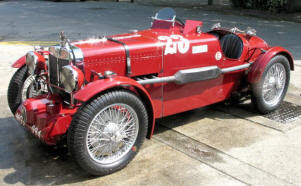 Picture Of Mg Classic Cars
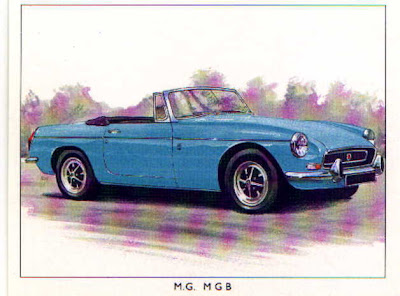 Picture Of Mg Classic Cars
Read more »
ป้ายกำกับ: Classic MG Car , Classic MG Cars , Mg Classic Car , Mg Classic Cars
A Car With Initials MG Parts 3
 Picture Of Mg Classic Cars
The first really important racing success was at Brooklands in the Double Twelve Hour Race in May, 1930, where the Midgets captured team prize and defeated their rivals, the Austin team. Fired up by the victory the Abingdon men decided to take the International Class H record, then held by Austin with 84 mph. They chose the EX120, a prototype model, and redesigned it completely. When the car was in running shape a private test was arranged. With the Brooklands track closed for the winter, the MG crew, led by Captain George Eyston, gathered on a strip of public highway outside Newmarket. In the foggy dawn they quietly unloaded EX120 from the truck and prepared the car for the run. Like saboteurs on a secret mission they watched for the police, who would have jailed the lot of them.
 Picture Of Mg Classic Cars
When their muffled, surreptitious preparations were done, Eyston made a spectacular entrance. Disdainful of the police, he arrived, gleaming in the early sunlight with white coveralls, white helmet, white gloves - a beacon that could be seen for miles. After a set of railroad crossing gates were illegally lifted, the test run was made. Eighty-seven mph! In December of 1930, the little car made it official at Montlhery, France, then raised it at Brooklands in March to 97 mph.
 Picture Of Mg Classic Cars
But Eyston was dissatisfied. He wanted to crack the magic 100 mph figure for the flying mile. With an engine of only 743 cc. such a record would stand for years. The attempt was made at Montlhery in the summer of 1931. It was successful. Eyston drove to a record of 101 mph. and then figured in an incident that would have mystified Sherlock Holmes.
 Picture Of Mg Classic Cars
After finishing the record run he swung around the track for an extra lap. As he drove out of sight of the pits, the crew heard the engine cut out. They piled into their truck and raced around the bend. There was EX120 in flames! Only seconds remained in which to save the driver. The crew knew that the big-framed Eyston could not remove himself from the tightly fitting cockpit! With frantic haste they crowbarred the side panels off. The seat was empty! A desperate search of the track revealed nothing - no driver!
 Picture Of Mg Classic Cars
Eyston himself later supplied the answers. On that last lap he discovered smoke and flames rising at his feet. Slowing the car to 60 he managed, with that last ditch strength of desperation, to jump from the car. A moment later a Frenchman, testing his Citroen, found the unconscious Eystron, put him in his car and drove across the fields to the Montlhery hospital. There the anxious MG crew found him, quietly recuperating from his bruises, not at all concerned about his phantom disappearance. This ended the saga of EX 120.
 Picture Of Mg Classic Cars
Before the dust raised by EX120 could settle, EX127 appeared - the Magic Midget. Sporting an aerodynamically streamlined body, it also featured a venturi type windshield, which sucked the oncoming air up between two parallel sheets of glass. The driver actually viewed the track through an open slot, but a test with a mechanic sitting on the bonnet, throwing confetti at the windshield, proved that nothing would get through. EX 127 raised the record to 120 mph. Then Bobby Kohlrausch of Germany bought it, installed the new Q-Type engine, ran the machine to a new record of 130 mph and followed that with a screaming 140 mph on the Frankfurt Autobahn. At that point, perhaps under Hitler's orders, the car was acquired by Mercedes-Benz.
A Car With Initials MG Parts 2
Friday, April 30, 2010
12:34 PM
,
1 Comment
ป้ายกำกับ: Classic MG Car , Classic MG Cars , Mg Classic Car , Mg Classic Cars
 Picture Of MG Classic Cars
 Picture Of MG Classic Cars
Read more »
ป้ายกำกับ: Classic MG Car , Classic MG Cars , Mg Classic Car , Mg Classic Cars
A Car With Initials MG Parts 2
 Picture Of MG Classic Cars
In 1923 Cecil Kimber constructed the first MG Classic Cars. He started with a Morris Oxford chassis and mounted a reworked Hotchkiss engine in it. Around this skeleton he wrapped just enough sheet metal to enclose the working parts, squeezed two bucket seats inside, and finished off the rear with a flashy tapered boat tail. The fenders were a gesture, square cut and mounted away from the body on outriggers. Strangely enough this Model 1, with its rounded Cowley, bull nose and no windshield, presented a sleek, functional appearance. It still does. The first MG is still in fine running order and is shipped periodically around the world for the adoration of MG fans everywhere.
 Picture Of MG Classic Cars
Although the first model had no more than a 4-cylinder 750-cubiccentimeter engine, it managed to do about 82 miles per hour, and in 1925 Kimber won a Gold Medal at the Lands End com petition. This early shakedown trial proved the worth of the. little car, and the year 1928 saw the first of the Midgets, the Mark IV which was rapidly developed into the Type M. It was phenomenally successful. Cecil Kimber's intuition was well founded: the desire of the public for a small high performance car did exist, and the car he designed went far beyond his expectations. William Morris, who now sported the title of Lord Nuffield, put the financial power of his organization behind the project and a new factory at Abingdon became the home of MG.
The new company, officially named the MG Cars Company, approached the business of building a production sports car with a direct ness of purpose that was almost frightening. The plan was simple. A design feature or a piece of equipment that could stand the stress of high speed and brutal punishment during hours of competitive racing was good enough to be incorporated into the sports model for the general public. This led to a pattern of operation. A prototype car was built first, then a record-breaking machine, which was run at official speed trials, followed by a racing version, and finally the so-called sedate road model. However, the road model always carried the genes of its fierce racing ancestry. Sedate was hardly the word!
A Car With Initials MG Parts 1
Tuesday, April 27, 2010
8:47 AM
,
2 Comments
ป้ายกำกับ: Classic MG Car , Classic MG Cars , Mg Classic Car , Mg Classic Cars
A Car With Initials MG Parts 1

 Picture MG 550 2009
 Picture MG XPower SV 2004
Read more »
ป้ายกำกับ: Classic MG Car , Classic MG Cars , Mg Classic Car , Mg Classic Cars
A Car With Initials MG Parts 1

MG Cars is a former British sports car manufacturer, which was founded in 1924, the creator of the MG brand.
A car with initials for its name? To a country accustomed to the sonorous ring of Deusenberg and Cadillac, the smooth flowing syllables of Chevrolet and Locomobile, and the hard, clean sound of Stutz and Ford, the lean initials MG, encased in their octagon, were quite strange. In 1912 William R. Morris (there's the M), a former bicycle maker, formed a company called Morris Motors Limited. A subsidiary corporation was named The Morris Garages (now you have the G) . But it was not until 1923 that the initials were placed on the radiator of a car.
 Picture MG 550 2009
MG Cars is best known for its two-seat open sports cars, but MG also produced saloons and coupés. More recently, the MG marque has also been used on sportier versions of other models belonging to the parent company.
 Picture MG XPower SV 2004
The first MG was built because of a need, a need that was sensed intuitively by Cecil Kimber, general manager of Morris Garages. He felt that the public wanted a small, but high-performance sporting machine that could be driven sedately on the roads during the week and raced on Sundays. But the most important point was that it be priced modestly. Not everyone could afford a Bentley or Mercedes, but a little MG would fit the pocketbook, perform as a commuting car, and with a quick change of sparkplugs make a hero of its owner on the weekend. This concept fits practically every production MG from the first midget to the modern streamlined MGA.
Subscribe to:
Posts (Atom)


